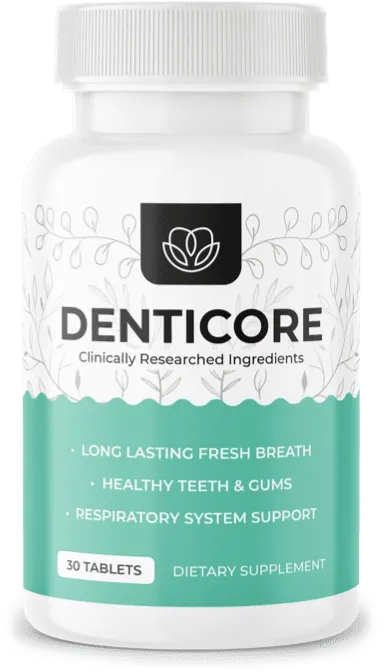
The question “Does DentiCore work?” needs a defined outcome. Fresh breath, bleeding gums, plaque control and cavity prevention are different endpoints with different accepted methods of evaluation. A bottle containing familiar ingredients is not itself proof of improvement in any one of them.
Product-level clinical proof has not been independently verified
The label establishes the formula as printed; a promotional presentation describes the seller's theory of action. Neither replaces a controlled trial of DentiCore with measured outcomes, a relevant comparator and transparent methods.
What is claimed versus what is demonstrated
| Statement | Evidence interpretation |
|---|---|
| “Supports healthy teeth and gums” | General wellness positioning; we have not independently verified controlled outcomes from the complete product. |
| “Long-lasting fresh breath” | Requires studies measuring breath/volatile compounds or validated user outcomes. Marketing language alone is not proof. |
| “Supports gum oxygenation” | A proposed seller mechanism, not independently verified clinical efficacy of DentiCore. |
| Minerals are important in oral biology | True generally for some nutrients, but dose, context and nutritional status matter. |
| Removes dental infections or reverses cavities | Not an evidence-supported supplement outcome and should not be used as a substitute for treatment. |
Why ingredient research is not product research
NIH dietary supplement fact sheets describe calcium as integral to teeth and bones. DentiCore's supplied label lists 20 mg of calcium, while typical total adult daily calcium recommendations are approximately 1,000–1,200 mg depending on age and sex. This comparison gives nutritional context; it does not predict the impact of DentiCore. NIH calcium↗
The blend is 120 mg collectively with no individual amounts disclosed. Even if an ingredient has research at a particular dose, the amount in the finished tablet may differ. A claim of “clinically researched ingredients” is not equivalent to independent trials of this actual formulation.
The “oxygenation” marketing story
Seller materials link gum health to oxygen availability and describe an oral-respiratory pathway. Healthy tissues do require blood flow, but the specific marketing explanation would need direct studies to establish how a swallowed tablet changes gum oxygenation and clinically important dental outcomes. We have not seen those results established on the supplied label.
Gum inflammation and periodontal disease have well-established relationships with plaque and other risk factors; professional screening and care are important. NIDCR gum disease↗
What has stronger evidence for daily oral care
The ADA recommends brushing twice daily with fluoride toothpaste and cleaning between teeth once daily. Those behaviors remain the foundation of home dental hygiene. People with recurring bad breath, dry mouth or bleeding gums should seek individualized dental advice instead of assuming a supplement is the answer. ADA recommendations↗
The standard we would want before making a strong claim
- A published or independently auditable trial of the finished DentiCore formula, not ingredients in isolation.
- Enough participants and appropriate randomization to reduce bias.
- Specified endpoints such as plaque scores, gum bleeding measures or objectively assessed breath.
- Clear reporting of safety events, funding, conflicts of interest and statistical analyses.
- Results that are reproducible and relevant to the advertised consumer population.
DentiCore is a supplement with an identifiable label, not an established treatment for gum disease, cavities, infections or chronic mouth odor. Consult a dentist if symptoms persist.
Sources and reference notes
Government/professional sources explain general nutrition and oral-care evidence; they do not endorse DentiCore. The product label documents what the supplied packaging states, not independent efficacy.