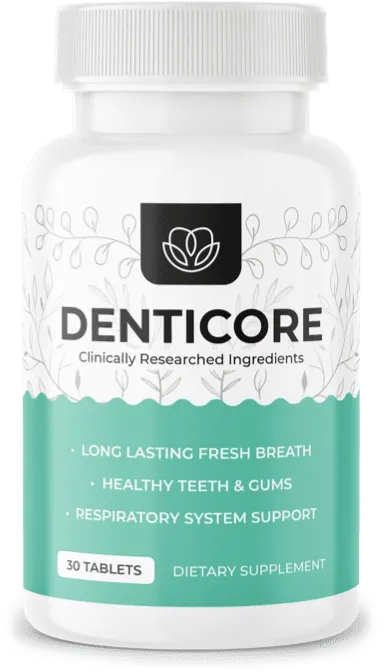
The most revealing part of a product page is often not the promotional headline. It is the Supplement Facts panel that tells you how much of a nutrient the manufacturer says is in a serving.
Start with serving size and directions
DentiCore prints “Serving Size: 1 Tablet” and “Servings Per Container: 30.” That means the quantities printed in the panel correspond to one tablet. If someone uses more than the recommended amount, they may also increase exposure to every included ingredient.
Separate amount from % Daily Value
20 mg calcium (2% DV) and 1.7 mg copper (189% DV) have very different relationships to daily nutritional benchmarks. %DV is a labeling reference, not an individualized prescription or a benefit rating. NIH calcium↗
Understand ingredient forms
Names in parentheses matter. Calcium appears “as dicalcium phosphate,” iodine “as potassium iodide,” and chromium “as chromium chloride.” Different forms may have distinct properties; the amount alone does not prove bioavailability or an advertised outcome.
Read blends skeptically
DentiCore lists four botanical/compound ingredients in a 120 mg proprietary blend but does not show their amounts separately. Do not divide 120 by four and assume each contains 30 mg: the manufacturer has not given that distribution. View label↗
Read precautions and other ingredients
“Other Ingredients” includes xylitol and peppermint in this label. The warning panel excludes use for minors and for pregnant or nursing people, and recommends consultation with a professional when medications or conditions are involved. The caution language is not decorative; read it before purchase.
Look for tests beyond the label
A detailed label is useful for identification but is not itself a clinical efficacy study. Ask for finished-product trials, transparent quality controls and independent evidence supporting the specific outcomes being advertised.
Sources and reference notes
Government/professional sources explain general nutrition and oral-care evidence; they do not endorse DentiCore. The product label documents what the supplied packaging states, not independent efficacy.